
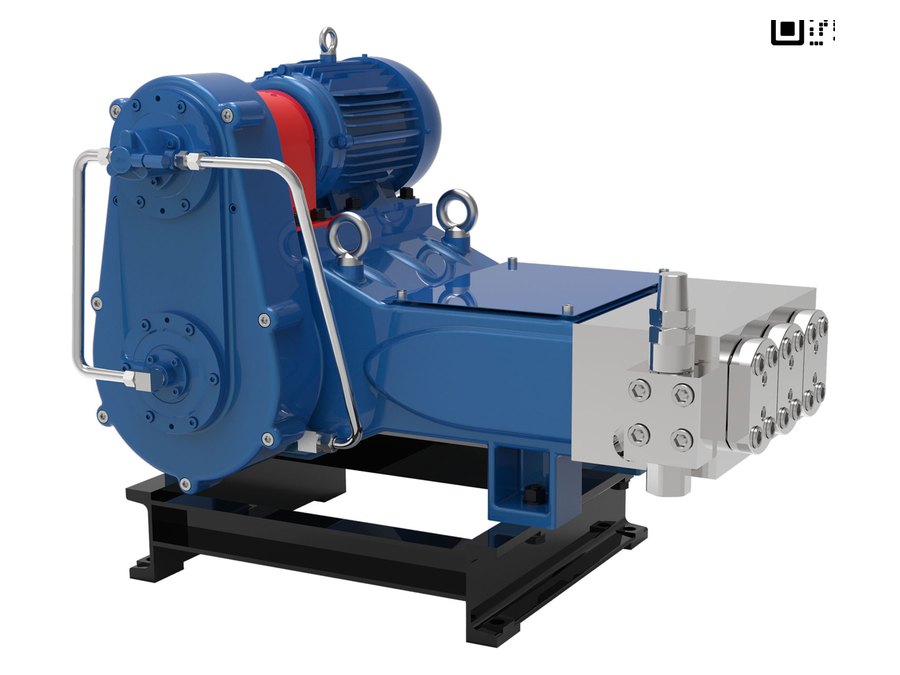
UDQ 12
- Flow
- 12 m³/h
- Head
- 200–630 m
- Pressure
- 2.0–6.3 MPa
Small boiler feed, high-mountain supply
UDZ series · multi-plunger reciprocating
Three, five and seven-plunger machines with mechanical crank drive. Stable efficiency above 90%, wear parts from 5,000 hours, and a footprint that replaces a multistage centrifugal pump without re-piping the station.
Above roughly 10 MPa, a multistage centrifugal pump is fighting its own physics: every stage adds clearance losses, and efficiency falls away as wear rings open. A plunger pump displaces a fixed volume per stroke, so its volumetric efficiency stays high for the life of the plunger — typically above 90% in continuous service.
The practical consequence is energy. On a 400 m³/h duty at 20 MPa, the difference between 62% and 90% efficiency is roughly 1,100 kW of shaft power — around 8.8 million kWh a year at 8,000 hours.
Retrofit without civil works. Our pump heads are arranged with the same suction and discharge orientation as the multistage centrifugal unit, so the replacement is a piping tie-in rather than a pump-house rebuild.
Most Chinese plunger pumps in industrial service are hydraulically driven: an oil power pack pressurises a cylinder that pushes the plunger. That architecture adds a hydraulic station, heat management, oil filtration and a second family of failure modes. Our machines use a crankshaft, connecting rod and crosshead — the architecture used in oilfield pumps, where availability is the whole point.
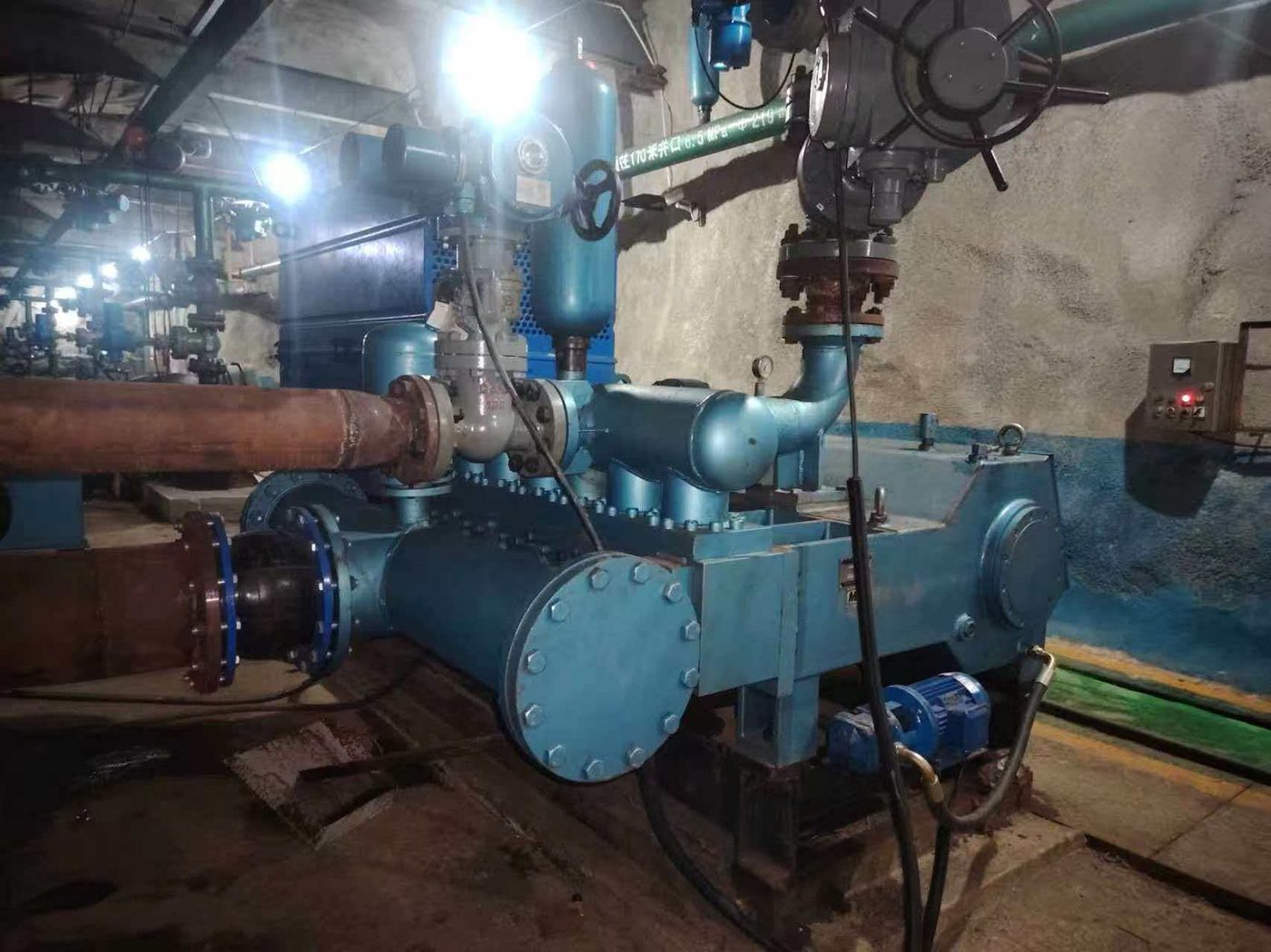
Built-in intelligence
The pump can be supplied with an edge agent: a compact industrial computer that watches the machine, explains what it sees, and keeps the operating point where the efficiency actually is.
Condition
Vibration, pressure and power are reduced to a health index with a plain-language conclusion — what is drifting, how fast, and what to do before it becomes a shutdown.
Efficiency
The agent tracks specific power against the commissioned baseline. When wear, fouling or a changed duty point erodes the saving, it says so — instead of the saving quietly disappearing.
Autonomy
Inference runs locally on an RK3576-class edge module: no cloud account, no data leaving the plant, and no link required in a mine shaft or a remote pump house.
Most monitoring stops at a trend line; the operator still has to decide whether it means wear, cavitation, a closed valve or a changed process. The agent carries the pump's mechanism model and its commissioning data, so it can attribute a symptom to a cause and put the result in words a shift team can act on.
Because the model is mechanistic rather than a black box, it keeps working when the duty point moves — the case where pure regression models fail.
It does not issue trip or start commands. Protection stays with the plant safety system and with people; the agent advises, logs and escalates. That boundary is deliberate — it is what makes the system acceptable inside a working plant.
Edge module and sensors can be quoted with the pump, retrofitted to an existing station, or packaged for a group of machines. The system is in pilot use on our own equipment; customer deployments are quoted per project.
Model range
Flow is fixed by plunger diameter and speed; head by the number of stages and the pressure rating. Pick the size nearest your duty, then confirm with the calculator.
Small boiler feed, high-mountain supply
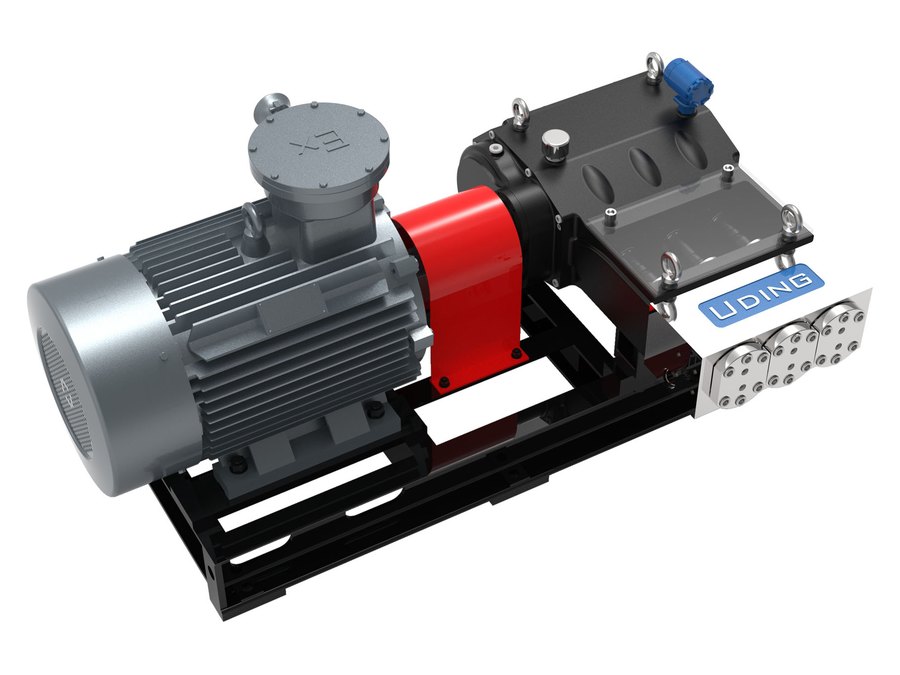
Boiler feed, descaling
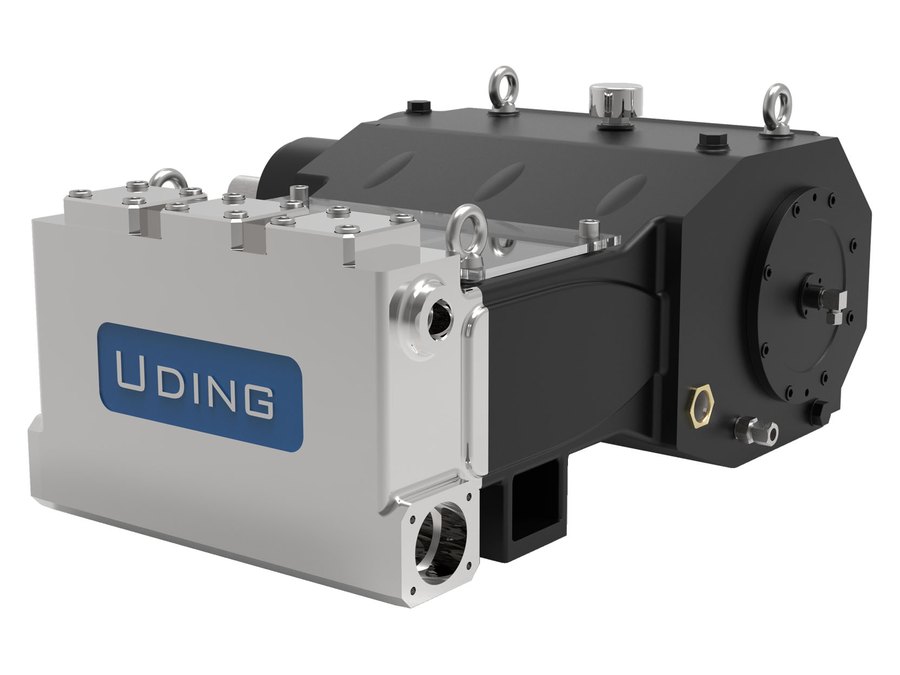
Boiler feed, process
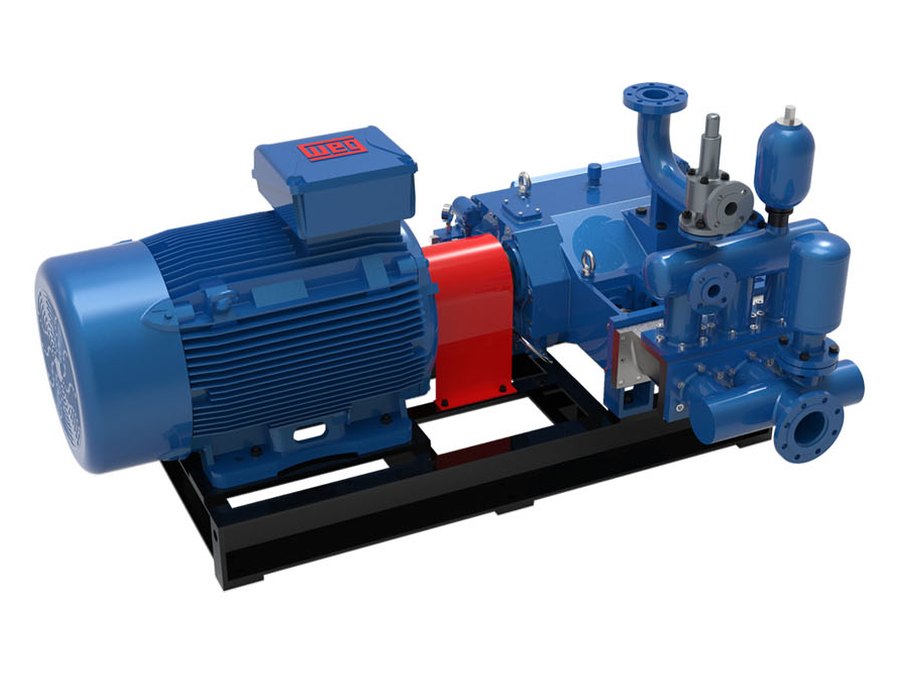
Boiler feed, water supply
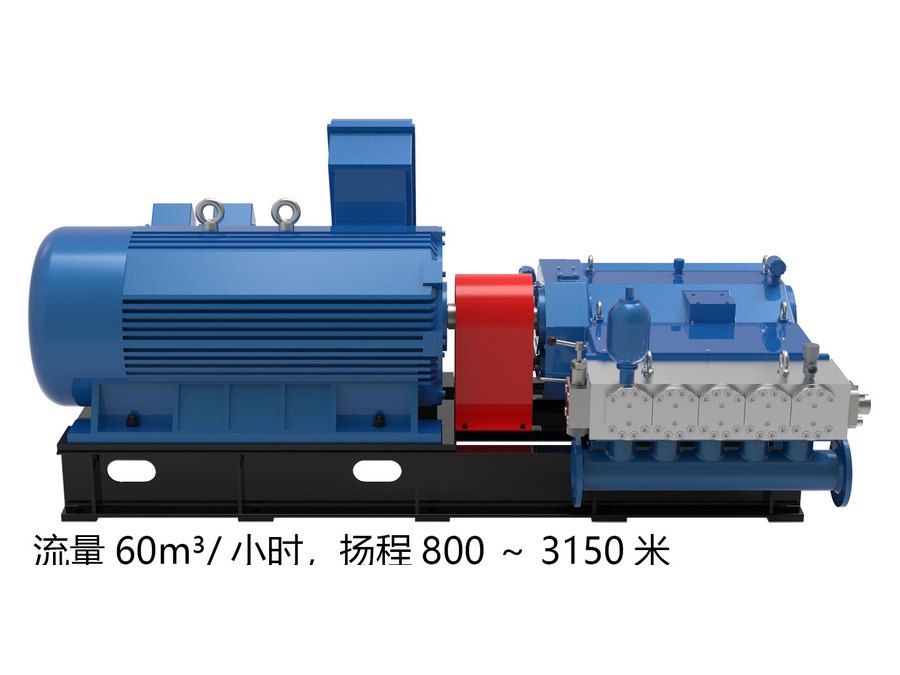
Highest head in the range
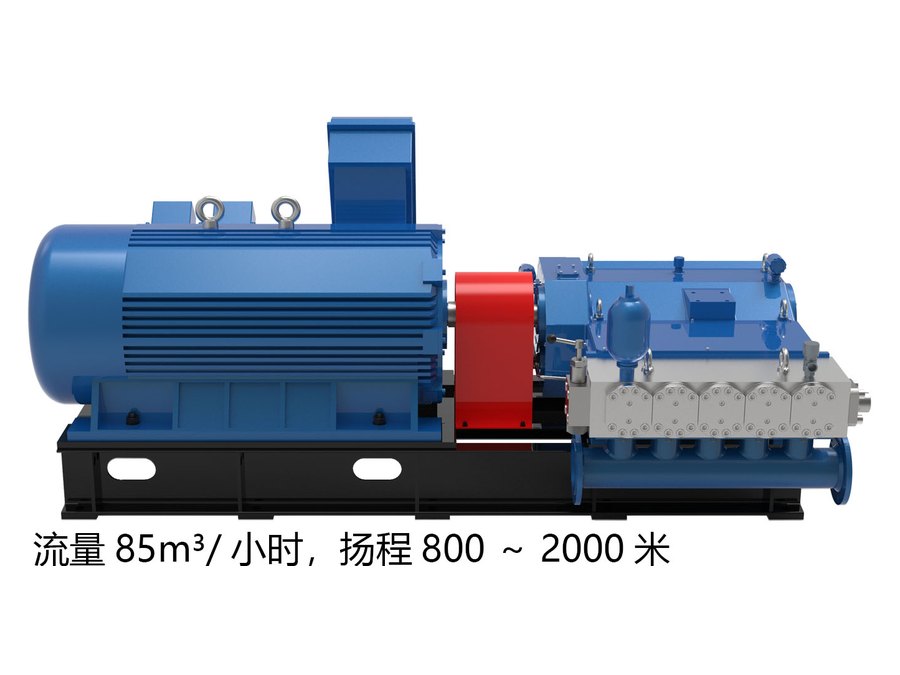
Boiler feed, mine dewatering
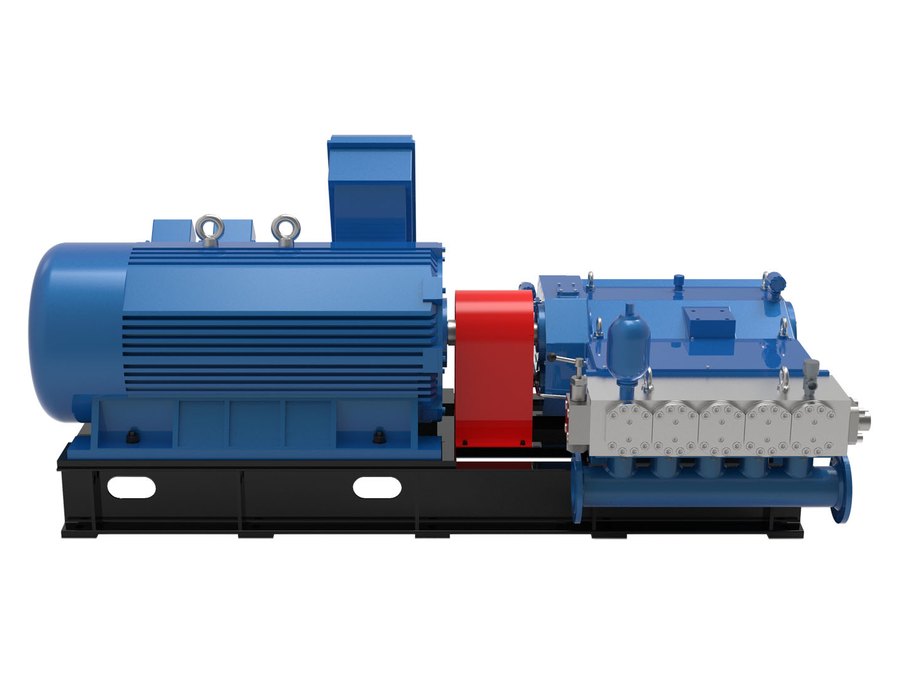
Boiler feed, mine dewatering
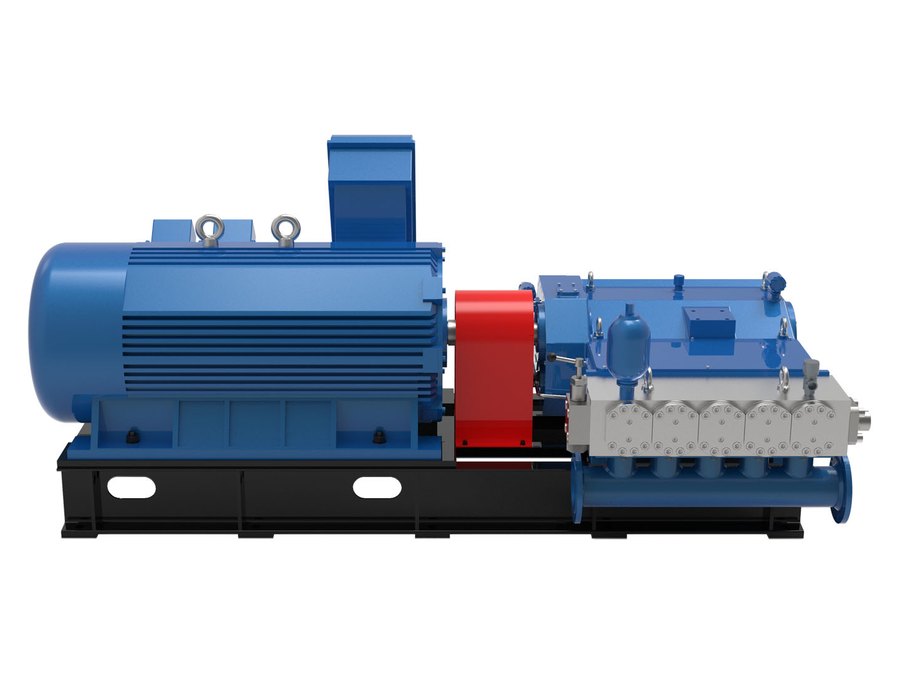
Mine dewatering, water supply
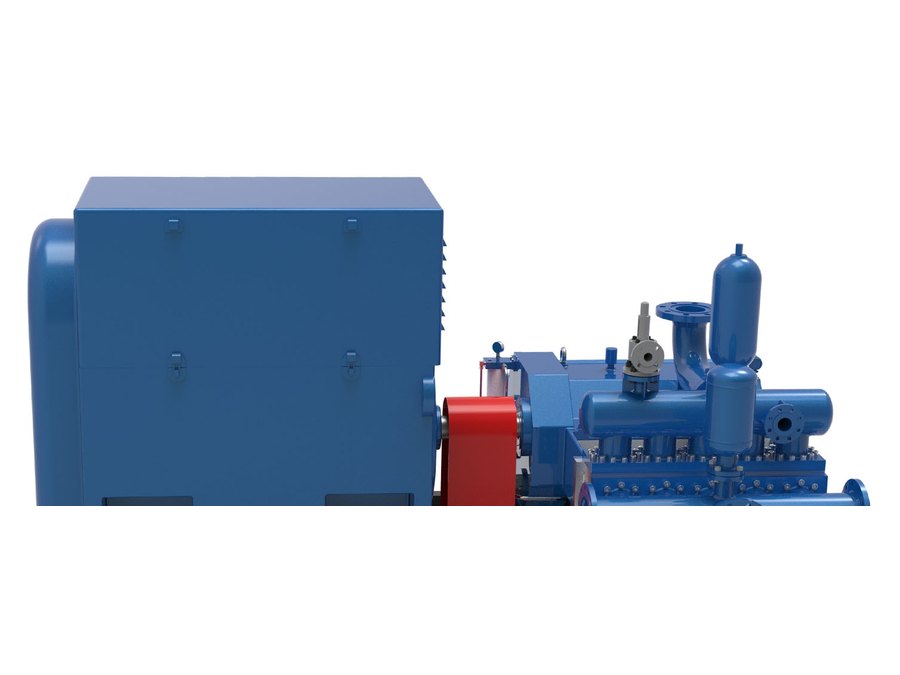
Mine dewatering
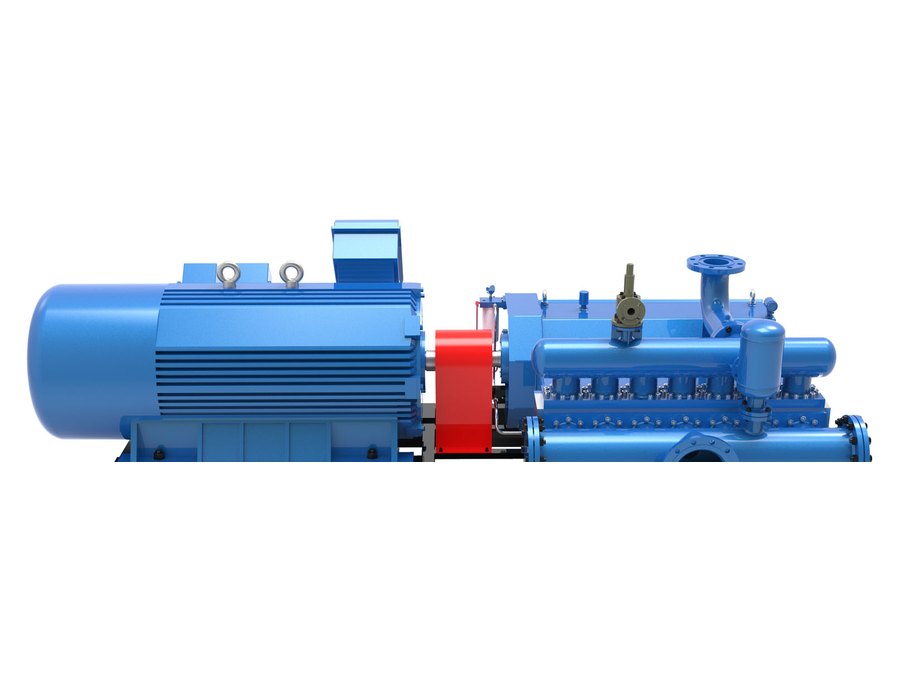
Mine dewatering, ash transfer
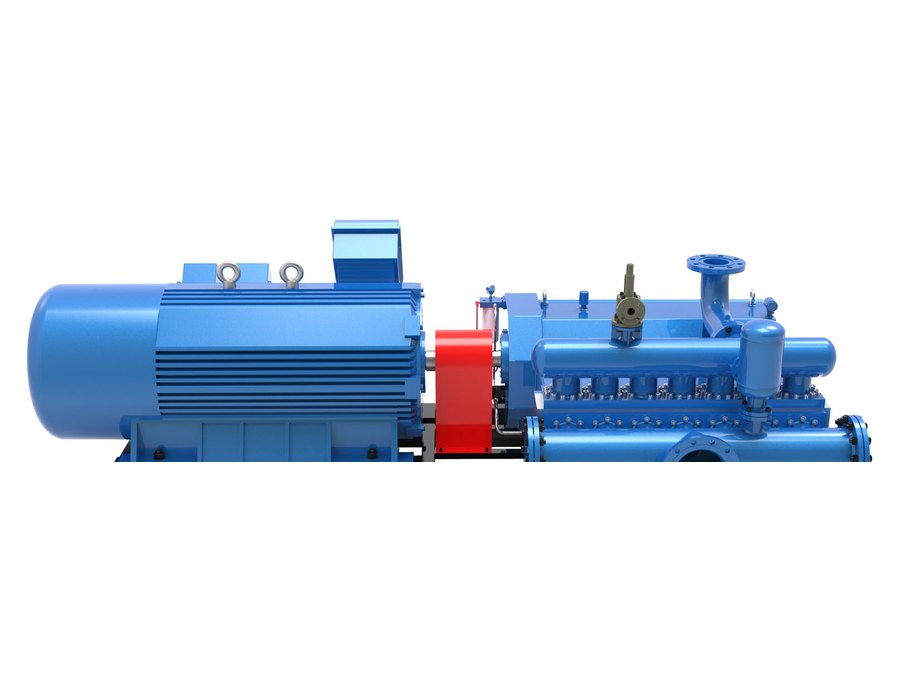
Large mine dewatering
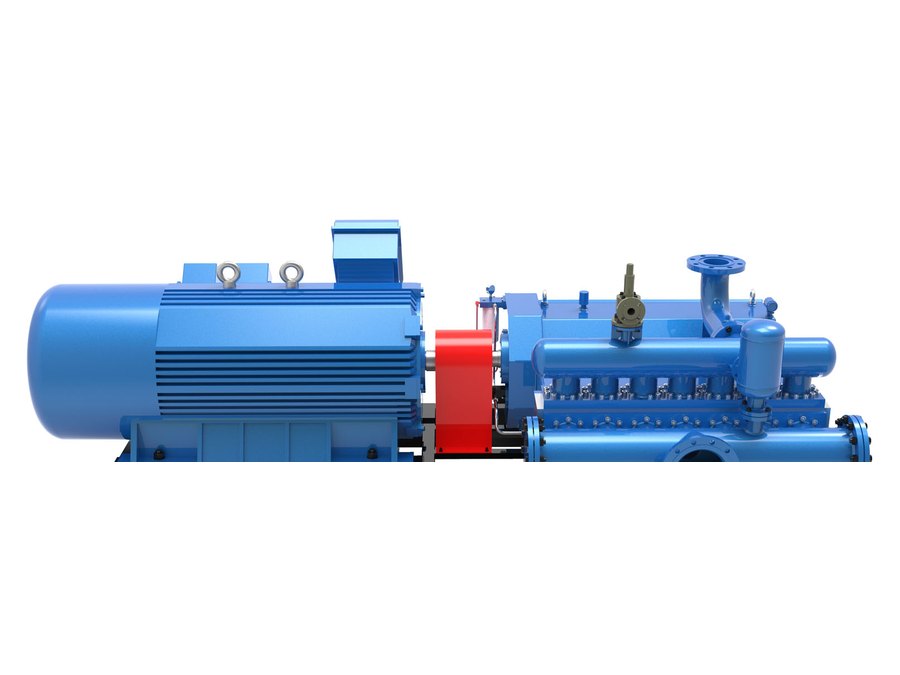
Largest single unit — replaces a 500 m³/h centrifugal pump
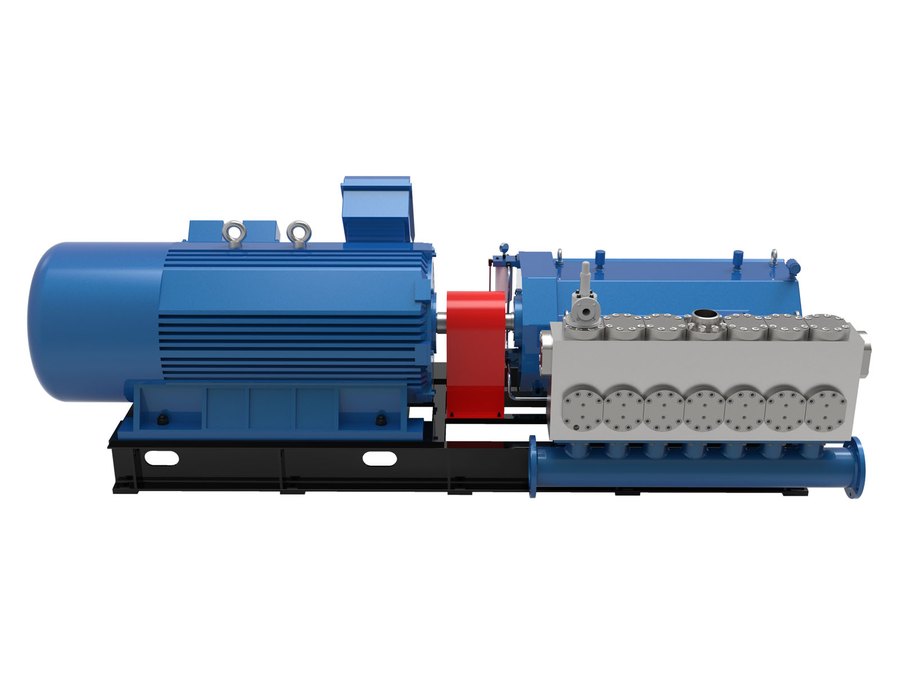
600 m³/h at high head, up to 2,240 kW
Speeds 180–310 rpm, volumetric efficiency ≥97%, overall efficiency ≥90%. Head in metres ÷ 100 gives the equivalent pressure in MPa. Injection series UDZ 30/50/100/160/320 …/16 covers 7–320 m³/h at 16–70 MPa — ask for that datasheet.
Replacing multistage centrifugal feed pumps on industrial and utility boilers, with stable pressure across the load range.
Discuss a duty →120–500 m³/h at 16–25 MPa; specific power down to 0.3 kWh/m³·MPa without a separate lubrication skid.
Water injection →Multi-stage lift from underground sumps, at pressures that shorten centrifugal pump life to months.
Dewatering →Steel and aluminium mill descaling at 20–40 MPa, with pressure held through the pass.
Descaling →Long-distance slurry and water transfer where pressure, not flow, is the constraint.
Tailings →Chemical, petrochemical and power process duties requiring heavy-duty reciprocating pump design.
Process duties →In most cases yes. The pump head is laid out with the same suction and discharge orientation, so the baseplate and piping tie in with minor modification. We ask for a piping sketch and the existing duty point before confirming.
Plungers, valve seats and seals are consumables with intervals from 5,000 hours. The crank, crosshead and frame are designed for 30,000 hours between overhauls. All wear-part replacement is done on site.
Yes — the unit can be supplied as a bare pump, a pump-and-motor set, or a complete skid with VFD, instrumentation and controls.
The UDZ range is built to Chinese national standards for reciprocating positive-displacement pumps. Material certificates, test reports and any third-party inspection required for your project are agreed at order stage — we state clearly what is and is not certified for each market.