 中文
电脑版
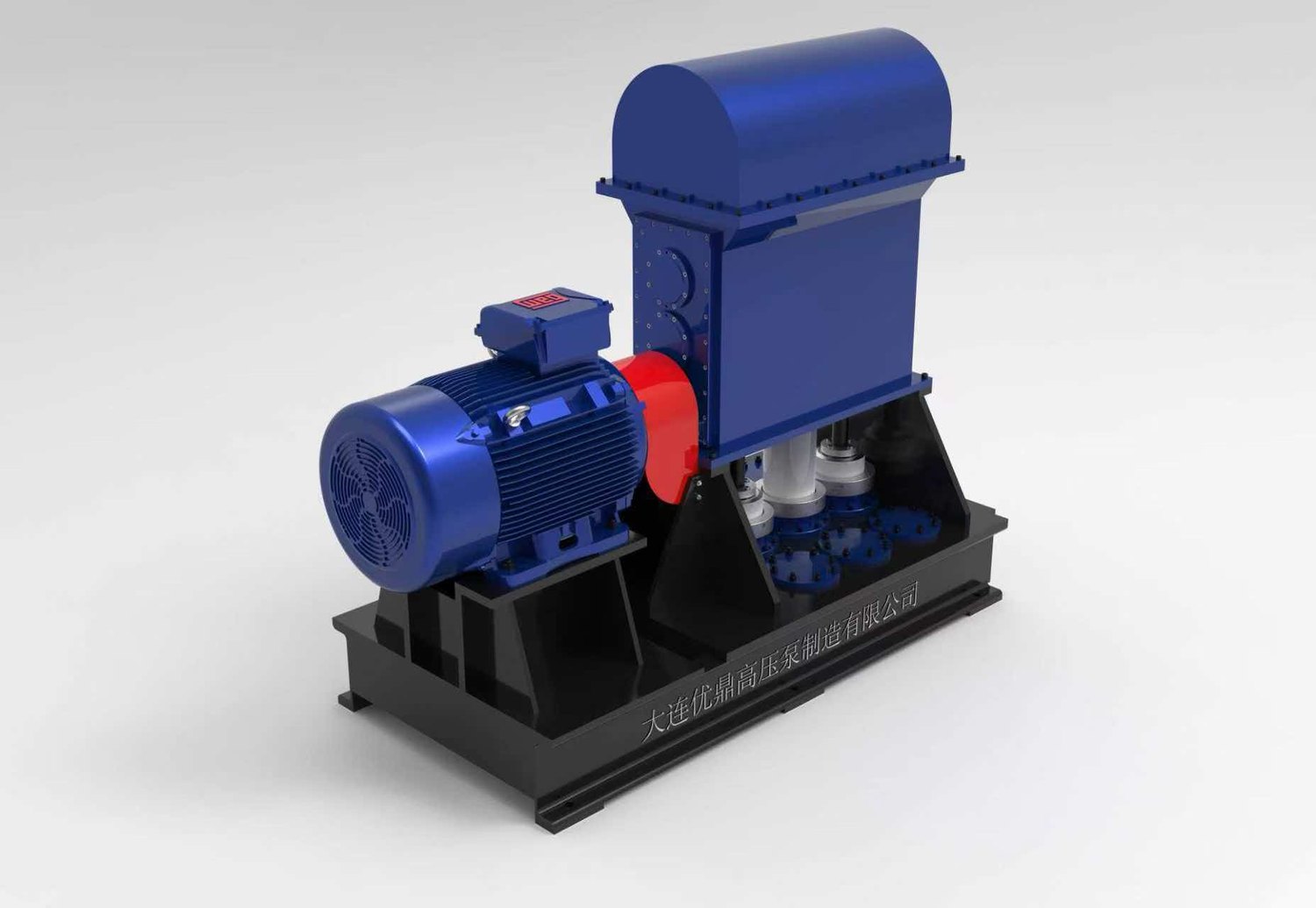
V5 series · vertical five-plunger
100–400 m³/h, up to 150 m head, solids above 30% by weight. A mechanical five-plunger pump with ceramic plungers and alloy valve seats — built to replace centrifugal slurry pumps that wear out in weeks and hydraulic ceramic plunger pumps that waste a third of their energy.
The problem
In mineral processing, slurry transport is the acknowledged weak point: centrifugal slurry pumps erode, and the energy bill follows the efficiency curve down.
Wear
Impeller and casing life on abrasive slurry, depending on solids size and velocity. Every rebuild is a production interruption.
Efficiency
Actual operating efficiency of a centrifugal slurry pump once wear has opened the clearances. The rest becomes heat and noise.
Energy
Annual electricity for a single medium-sized slurry pump at industrial tariffs — most of it lost to inefficiency.
The V5 answer
Instead of accelerating abrasive solids against a spinning impeller, the V5 displaces them slowly with five vertical plungers. Velocity stays low, so erosion is a function of the materials in contact — not of the whole hydraulic path.
Result: efficiency above 83% — more than 33 percentage points above a centrifugal slurry pump — and roughly half the electricity for the same duty.
| Parameter | V5 five-plunger |
|---|---|
| Flow | 100–400 m³/h |
| Head | up to 150 m |
| Discharge pressure | up to 1.5 MPa |
| Solids concentration | ≥30% by weight |
| Efficiency | >83% |
| Wear parts life | 4,000 h+ |
| Overhaul interval | 30,000 h+ |
| Drive | Mechanical crank, no hydraulic station |
Duty ranges are indicative; final selection depends on solids size distribution, density and pH.
Comparison
| Centrifugal slurry pump | Hydraulic ceramic plunger | V5 mechanical plunger | |
|---|---|---|---|
| Efficiency | 25–50% | 65–70% | >83% |
| Wear life | 15 days – 6 months | Moderate | 4,000 h+ on wear parts |
| Hydraulic station | No | Yes — oil, cooling, filtration | No |
| Maintenance | Frequent rebuilds | Complex circuit | On-site wear parts |
| High solids (>30%) | Poor | Good | Good |
Stable pressure through the fill and hold phases, faster cycles and drier cake.
Filter press feed →High-density transport with low velocity and predictable wear.
Tailings transport →Concentrate and dense-medium transfer where centrifugal impellers fail early.
Discuss a duty →The V5 is designed for the particle sizes typical of mill discharge, filter press feed and tailings. Send the size distribution with your enquiry — valve and seat selection depends on it.
For 100–400 m³/h slurry duties up to 150 m of head, yes. If you need more pressure, the TL multi-plunger range goes to 70 MPa.
Wear-part replacement is done in place and is measured in hours, not days. Overhauls at 30,000 hours are planned, not emergency work.
大连宏实科技有限公司 · DALIAN HONGSHI TECHNOLOGY
© 2026 · Mobile edition · 手机版